
logo

A Mind @ Play

The Righteous Mind: Why Good People are Divided by Politics and Religion
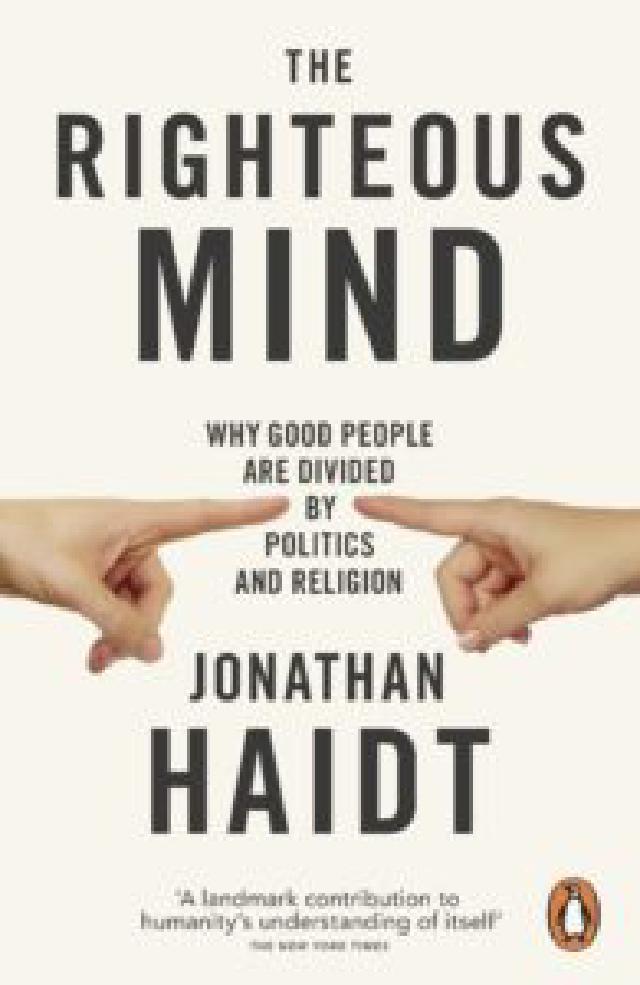
Surveying today’s political landscape, it’s easy to suppose we’re approaching a precipice. Passionate intransigence divides societies into blocks which, even where decidedly secular, are rallied around with religious fetishism. It seems that ideological boundaries are increasingly hardening, poisoning the political dialogue, preventing constructive discourse and contributing to almost maddening levels of senseless blustering.

In The Righteous Mind, social psychologist Jonathan Haidt investigates the concept of morality and shows how differing political groups can reach such disparate conclusions from the same starting point. Gradually building up his argument, Haidt succinctly retreads a lot of territory covered elsewhere in more detail, but which is vital to understanding his standpoint.

3 minutes to read

Atlas Shrugged

Perhaps the most significant book in post-war American literature, one which has regained popularity since the start of the economic crisis, Altas Shrugged is the embodiment of an ideal society, the ultimate vehicle for Ayn Rand’s philosophy of objectivism. Weighing in at over 1,000 pages of tightly-packed print, it’s also one of the longest novels in English literature. Is it any good?
3 minutes to read

Free Will?

Slightly confusing argument to start with, but this comic provokes enough argument for legal eagles and philosophising owls alike. Would the three go down for attempted murder or conspiracy to commit murder? Would Alp get sentenced for manslaughter for being the last one out of the room and apparently the one to finally turn the key? Should Aaron take the blame for ultimately removing the water, the pre-meditated poison going unused? Did Harold commit suicide by being so dopey about sitting around in there with just a bottle of water in the first place? Could Alp get committed for being so loopy as to drill several holes in a bottle after confusing sand and water?

One minute to read

Finding Space for the Public in Transport

This is one of those posts which makes it to the draught stage and never any further, but as I was tidying up my WordPress install, I decided with a bit of reworking it’s something I still feel strongly about. The original title had referred to British public transport in particular, but in truth there is very little specific to the British experience.

Virgin Trains

Before I start my rant, let me plainly state that I am great supporter of the principles of public transport. That is not to say that I don’t see the use or take advantage of private transport, merely that I feel the balance in society is generally wrong, particularly in the first world, or whatever the preferred term is these days. These societies should be perfectly capable of providing for the vast majority of man’s annual miles, with our regular combinations of buses, trams, trains etc. and private transport being available to fill in the gaps where required. Being able to pack your bags, grab the kids and hit the road for a weekend away seems like a reasonable thing to do, but where is the logic of moving a ton of metal to work and back five days a week?

8 minutes to read