logo

A Mind @ Play

2022 in Review

So 2022 was the end of the plague. After two years of monotony and drudgery, this was the year that the virus lost its potency, and people gave over caring. The virus is here to stay, joining the other collection of seasonal ailments that fill beds in the wintertime. While many countries have dropped all restrictions altogether, in Germany the regulations have become less transparent, with the occasional strange restriction still in place seemingly for the sake of it. So while masks remain compulsory on public transport, the word compulsory has evolved to mean ‘suggested’.
7 minutes to read

2021 in Review

Another year of the plague behind us, another 365 days of solitude. It’s hardly Marquez, but it certainly feels like life has been chugging along in neutral after so many heady years in first gear. The year was mostly dominated by work, with little in the way of holiday breaks, social activities or other diversions to break up the monotony.

So joining the yearly roundups from 2015 , 2016 , 2017 , 2018 , 2019 and 2020 , here’s looking back over the second year of the plague, 2021.

12 minutes to read

2020 in Review

This year has been anything if not interesting. At the start, a lot of people around me seemed to answering the call for change, with numerous friends choosing to up sticks, start new careers, move houses, or meet new partners.

While little changed for me beyond shifting to working from home, one difference was saying goodbye to a forum I’d been running for nearly two decades. As no one had posted anything in nearly twelve months, and its use had been dwindling for some years already, it seemed the time had come to save some computing cycles and lay the bits to rest.

13 minutes to read
Cybercrime and the DarkNet

Cybercrime and the DarkNet

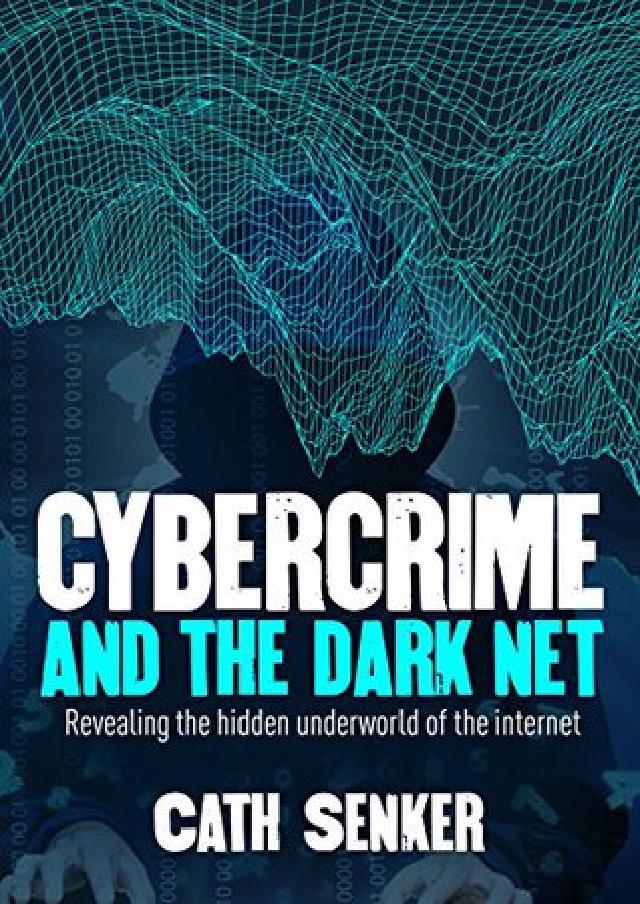
Cybercrime and the Dark Net by Cath Senker

As society tries to catch up with the overwhelming advancements in technology of the past few decades, it is unsurprising that governments and legislators find themselves plugging the gaps where criminality can flourish. Developments in encryption, obfuscation, distribution and anonymisation give criminals and privacy activists alike a broad toolkit for conducting their activities away from prying eyes. In Cybercrime and the Dark Net, Cath Senker offers a brief and easily digested overview of this bewildering digital landscape. The book is essentially a collection of short vignettes covering a wide variety of different forms of cybercrime, with an essentially separate second section surveying the dark net.

4 minutes to read
How Not to Be Wrong: The Power of Mathematical Thinking

How Not to Be Wrong: The Power of Mathematical Thinking

Maths is a powerful tool, but in the wrong hands it can be pointless at best, dangerous at worst. Unfortunately, most human beings are a wrong pair of hands. We weren’t designed for handling numbers of any complexity, and tend to be out of our depths once they go beyond single digits. But a basic knowledge of numbers makes us overconfident and keen to interpret figures and statistics we don’t really understand as if they were cold hard facts. You only need to watch someone trying to work out which packet of washing powder presents the better deal when the supermarkets add a few percentages to the labels, or our reactions to opinion polls or the latest cancer-scare headlines.
3 minutes to read
Wesley: The Story of a Remarkable Owl

Wesley: The Story of a Remarkable Owl

Doubtless recommended to me because I enjoyed Are We Smart Enough to Know How Smart Animals Are? by Frans de Waal, this story was at first somewhat disappointing in the sense that it is to a greater extent a personal memoir rather than an investigation of animal intelligence. I had been expecting a heavier, more science-laden account of their relationship, but once I’d adjusted to the style and tone of the book, I found plenty here to enjoy.
One minute to read
Freedom Next Time

Freedom Next Time

What you need to know about humans is that they are dicks. And if you give them any power their dickness prevails over everything else.

That beautifully succinct phrase comes from a review  on Good Reads and is an understandable frame of mind to find yourself in after reading this book. Reading it ten years after publication, it’s almost surreal how little has changed in the intervening period, how the wheels of progress continue to grind on the gears of conservatism. In Freedom Next Time John Pilger surveys the state of peoples suffering under the weight of ignorance, ill-will, apathy and condescension in various theatres of the world, turning the spotlight in turn on Palestine, India, Afghanistan, South Africa and the Chagos Islands.

4 minutes to read