

logo

A Mind @ Play

Kindle 4 WiFi Frustrations

Kindle 4 WiFi Frustrations

Just had a maddening time trying to work out why a Kindle 4 , which was to replace a Kindle 3, refused to connect to the family wireless. After trying all of the obvious – resetting devices, checking passwords – it was off to scour the web for a solution. All kinds of suggestions cropped up, relating to passwords or SSIDs with special characters, or wireless networks using channel 13, but none of them applied to our situation. Finally I hit upon a post which hinted that the Kindle 4, unlike its predecessor, doesn’t support WPA2 with AES encryption. Switching the router over to accept WPA/TKIP and WPA2/AES together didn’t make a difference, but the device finally logged in when I turned AES connections off altogether!
2 minutes to read
Real(ly Tacky) Tek Driver Update

Real(ly Tacky) Tek Driver Update

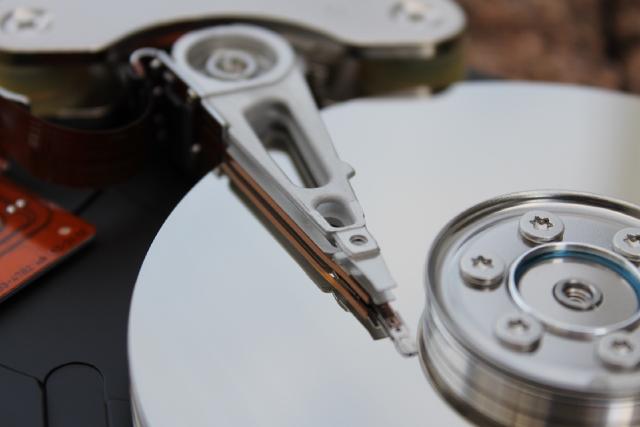
Argh, you’re kidding me. Did the Realtek HD Audio Drivers 6.0.1.7245 really just copy everything it found in the folder with the setup file over to the Program Files directory? Not the files in the executable .zip file, not the files in a list, no, everything it could get its grubby digital hands on. So a quick driver update ended up copying 40 GB of crud between two hard drives. Reminder to self: clean out the TEMP folder more often!
One minute to read

CAT Calls: Searching for Translation Software

I’ve been translating on the side for some time, but have only recently decided to make this a steadier form of income. As part of that, I wanted to investigate some of the CAT tools currently on the market. Aside from tinkering with the open source offering OmegaT some years ago, until now I hadn’t tried any of the tools listed.

As with many software niches there are a lot of options in this market, and not many straightforward answers. It sometimes seems that the smaller the niche, the more choices there are. On my list to try out were SDL Trados Studio 2011, memoQ 2013, Wordfast Anywhere, OmegaT, Déjà Vu X2 Professional and Across Personal Edition ((I didn’t actually get to try out Across’ free software option, as it immediately complained that it couldn’t open my documents as I don’t own Microsoft Word, but rather use OpenOffice. Nevertheless most reviews suggest it is software to be avoided.)). In this post I look at the market leader’s offering SDL Trados Studio 2011.

7 minutes to read

The Shallows: What the Internet Is Doing to Our Brains

This post is also available in English .

Der Klappentext behauptet, dieses Buch sei „Der stumme Frühling“ des literarischen Geistes. Zwar vergleicht man hier Äpfel mit Birnen, aber im Kern gibt es in diesem Buch eine provozierende Erörterung der Auswirkung verschiedener Techniken auf die Funktionsweise des Geistes. Carrs Hauptthese, die er in seinem Artikel „Is Google making us stupid?“ schon ausführlich erklärt, ist, dass das Internet Veränderungen in unseren Hirnen auslöst, die unsere Denk- und Erinnerungsvermögen nicht unbedingt positiv verändern. Grundsätzlich spielt das Internet die Rolle eines Universums der Ablenkung, das eine unendliche Vielfalt an leichter Unterhaltung und sinnlosen Unterbrechungen einführt, wodurch wir unsere Gehirne nach einem süchtig-machenden Muster von ineffektivem Multitasking trainieren. Wir heben die neue Technik auf ein Podest, als Eingang zu einer neuen Welt des Wissens und der Kommunikation, die viele Vorteile im Rahmen von sozialer Wechselwirkung, persönlicher Freiheit und wissenschaftlicher Bemühung mit sich bringt. Carr ist jedoch der Meinung, dieses Portal sei beileibe nicht ohne Nachteile, dass diese Technik unsere Fähigkeit des tiefen Denkens und das effektive Nutzen des Gedächtnisses beeinträchtigt.

3 minutes to read

The Shallows: What the Internet Is Doing to Our Brains

The blurb claims this book to be a “Silent Spring” for the literary mind. That is certainly comparing apples to oranges, but at the core to this book there is a thought-provoking argument about the impact of various technologies on the workings of the mind. Carr’s main thesis (to be found almost in its entirety in his article “Is Google making us stupid?”) is that the Internet is changing our minds, our ability to think and the way we use our memories, and all this not necessarily for the better. Essentially, the Internet is a universe of distractions, offering endless light entertainments and pointless interruptions that train our brains into an addictive shallow pattern of ineffectual multitasking. We hold up the new technology on a pedestal as a doorway to a new world of knowledge and communication, bringing with it benefits for social interaction, personal liberty and scientific endeavour, but Carr claims that this portal is not without its drawbacks vitiating our ability to think deeply, or use our memories effectively.

3 minutes to read

Windows on Inactivity

Here’s a little tip for anyone like me still using Windows Vista who’s having trouble with the system logging/locking you out after a certain period of inactivity (usually 5 or 10 minutes). The two most common culprits for this are the screensaver settings or possible power saving options, both accessible from within the Control Panel. However, what isn’t obvious and what drove me mad trying to find, is that even if you have None selected as your screensaver of choice, it appears Windows still sees fit to still log the user out after the allotted period of time. This despite the fact that the On resume, require logon checkbox is greyed out.
One minute to read

Changing Your phpBB3 Domain

If like me you’ve decided at some point to move your phpBB install to a new domain or location within a domain, there are a number of little hurdles to jump before you can successfully consider the move complete. Here’s my short one-two-three guide for getting your forum moved over to a new address.
2 minutes to read

The Google Docs Server Rejected Roundabout

It might not be particularly well featured, but Google Docs does at least provide a quick and easy way to share your documents, albeit with messed up formatting and various other caveats. Today, however, I came across a problem uploading some small files which produced the rather pallid error message “Server rejected.” Something wrong with my files? With the browser upload? With the server itself? No idea.

Fortunately there was an easy, if rather roundabout fix available: simply email the files to my Gmail account, and use the option there to open them with Google Docs. Bingo!

One minute to read

The WordPress 3.0 Milestone

Although it’s only slated for release sometime in May, the first beta of the new WordPress 3.0 is already doing the rounds. Blog Oh Blog has a nice summary of the changes and additions in the new version : most of the updates are fairly innocuous, perhaps the largest mention should go to the integration of WordPress-mu, for setting up multi-user blogs and networks.

However, the announcement that really put the cat amongst the pigeons has been that the core development team may now be promoting what were formally called canonical plugins, now known as core plugins following the unpublished results of a poll in December . It appears that whilst attempting to address a genuine issue, the very idea of having plugins that stand in the limelight with an official stamp of approval has incensed many community plugin developers.

Some really excellent debate has been held which has, amongst other things, revealed that the initial go ahead for core plugins will be very limited; just three plugins, including an old, out-of-date plugin, a chunk hived off from the core, and a newly developed plugin. Nevertheless, the potential for these core plugins to have wide-reaching effects on the plugin development pool, create stagnation in the community and a greater top-down hierarchy is something that in the eyes of many developers and enthusiasts, has not been addressed.

10 minutes to read

Fixing a Broken Network Printer

There’s one problem which was driving my parents nuts on XP for some time before we finally got around to finding a reasonable solution. For whatever reason, one of their computers insisted on automatically adding the shared network printer on the other machine as the default printer in the list. This regardless of whether we had already assigned a local default, and whether the network printer was already in the list.
2 minutes to read