6 Ways of Breaking the Brexit Deadlock
If at first you don’t succeed, you fail.
GLaDOS, Portal
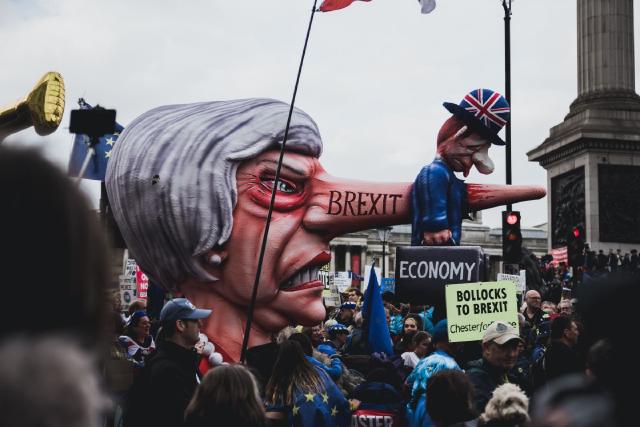
Ardent Remexiteer Theresa May managed to spend the latter half of her illustrious spell as prime minister trying to ram her deal through the Commons like a skipping needle on a strong and stable turntable. Now she’s abandoning ship, the sycophants and navel-gazers are lining up around the block to be the next hero to try to pull the sword from the stone. Unfortunately, with yon parliament rejecting the deal, and selfsame parliament rejecting no deal, the likelihood of the next helmsman managing to successfully navigate this particular brown waterway looks slim. And with the public still split down the middle , even a new referendum would probably only turn back the clock as far as 23rd June 2016.
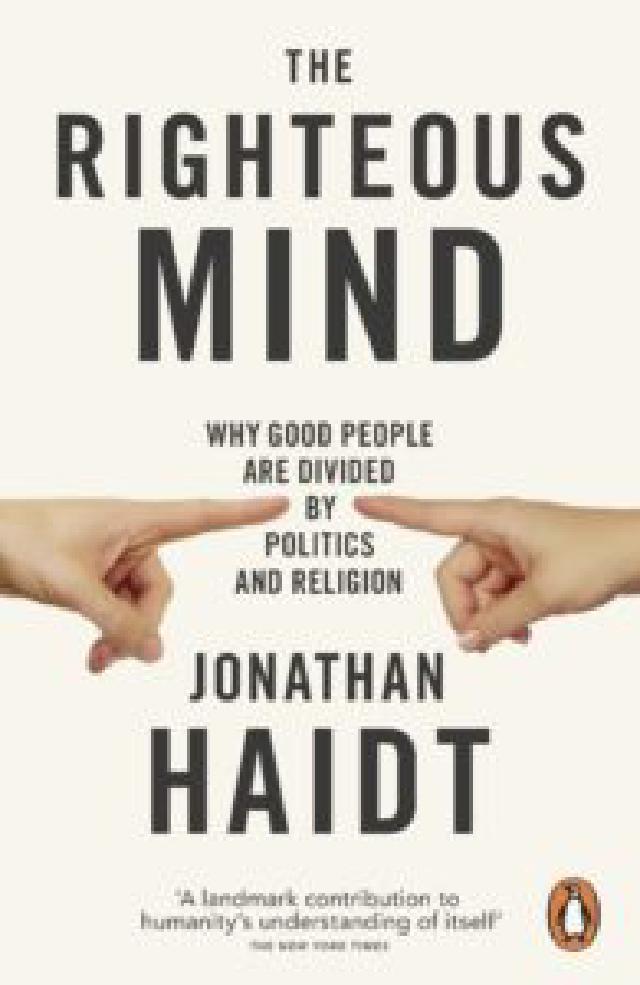
The Righteous Mind: Why Good People are Divided by Politics and Religion

Surveying today’s political landscape, it’s easy to suppose we’re approaching a precipice. Passionate intransigence divides societies into blocks which, even where decidedly secular, are rallied around with religious fetishism. It seems that ideological boundaries are increasingly hardening, poisoning the political dialogue, preventing constructive discourse and contributing to almost maddening levels of senseless blustering.
In The Righteous Mind, social psychologist Jonathan Haidt investigates the concept of morality and shows how differing political groups can reach such disparate conclusions from the same starting point. Gradually building up his argument, Haidt succinctly retreads a lot of territory covered elsewhere in more detail, but which is vital to understanding his standpoint.
A Pleb by Any Other Name
Brexit Bullshit
Biofuels: Oil for Votes?
Biofuels
Just where is the EU going with its agricultural policy? With the European Commission endorsing a plan to up the previous goal of a 5.75% market share for biofuels in the overall transport fuel supply by 2012, to 10% by 2020, one has to wonder which part of the EU’s goals is being pushed hardest. From the EU website :
Failte go dti an tAontas Eorpach
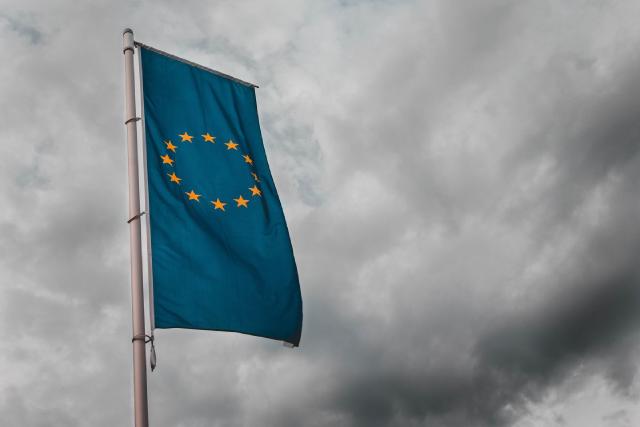
EU Flag
On January 1st of this year, under the continuing enlargement plans, Romania and Bulgaria acceded to the European Union. At the same time, the number of official EU languages was enlarged to 23, now including Romanian, Bulgarian - and Irish. The inclusion of the latter might seem to come at an odd time, given that the Republic of Ireland has been a member since January 1st, 1973, and Irish is its official language. Yet it was through English that the Republic handled its application to the Union.
To take some basic figures, Irish is spoken by less than half of the Republic’s population, whilst it is in daily use by only 5% ((A generous assessment, since this figure appears to include schoolchildren who use the language in class on a daily basis.)). To put this in some perspective, there may be more than twice as many Welsh speakers, while both of these Celtic tongues pale in comparison to Catalan, for example, with more than 7 million speakers. Ireland’s European commissioner, Charlie McCreevy, insists that Irish is central to Irish cultural identity, and its acceptance into the European fold has prompted calls for the inclusion of other minority languages ((Spain has already requested semi-official status for Catalan, Galician and Basque.)).