logo

A Mind @ Play

Brexit in Germany

Brexit in Germany

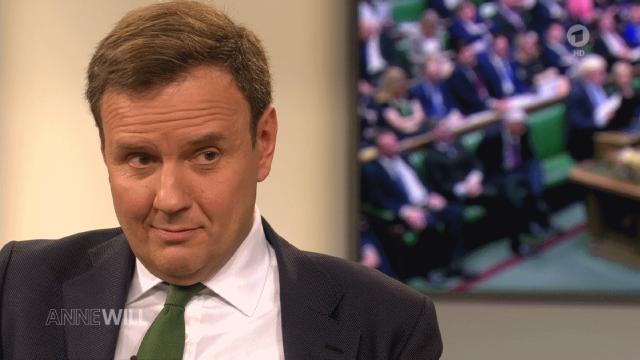
You almost have to feel sorry for Greg Hands, sitting as a guest on Anne Will’s show, trying to defend Tory policy. Invited to a five-to-one Brexit bashing, it’s a debate of the ilk where the quacks aren’t invited in the name of ‘balance’. From the off, and as if to distance himself from the madness he’s supporting, Hands immediately claims to have been anti-Brexit, to have been anti-Boris during the leadership change. But not one to let principles get in the way, he’s supporting both of them because ‘democracy’. What follows is a virtuoso display of logical acrobatics skills as he attempts to defend his position: the shittiness of Britain’s democracy (being old is apparently a compliment?); that the referendum somehow showed clarity of purpose; that Boris threatening to ignore the law to push through a no-deal Brexit is democracy in action; that proroguing parliament is standard procedure and clearly shouldn’t be reconsidered at such a crucial juncture; that an election could show what the people want, but a second referendum would be undemocratic. If he weren’t sitting there looking like a naughty schoolboy called to the headmaster’s office, his mind-bending mental tricks might have earned some applause.
3 minutes to read

Jimmy Aldaoud

Jimmy Aldaoud

https://twitter.com/ _waleedshahid/status/1159297993780203520

As Thomas Hobbes once fathered the phrase, life before the central state was solitary, poor, nasty, brutish, and short. In Jimmy Aldaoud’s eyes, life with the United States wasn’t much better. Aldaoud was victim to the kind of cretinous bureaucracy touched by a sprinkling of laughable xenophobia. Not that there’s anything funny about the result. A man died as a direct consequence of the kind of senseless and callous rule-making that surely the gobbiest semi-democracy in the world ought to be a little ashamed of.

2 minutes to read
6 Ways of Breaking the Brexit Deadlock

6 Ways of Breaking the Brexit Deadlock

If at first you don’t succeed, you fail.

GLaDOS, Portal

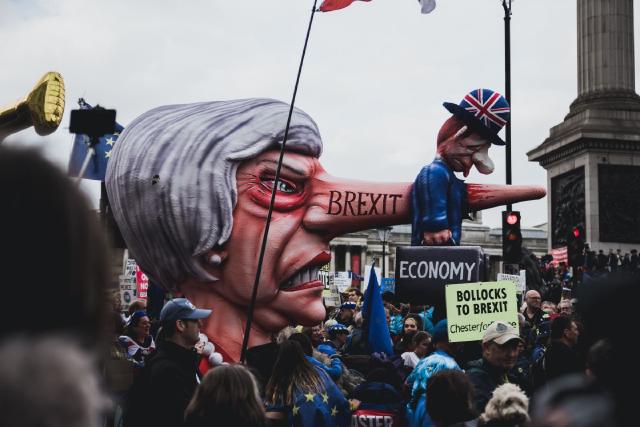
Ardent Remexiteer Theresa May managed to spend the latter half of her illustrious spell as prime minister trying to ram her deal through the Commons like a skipping needle on a strong and stable turntable. Now she’s abandoning ship, the sycophants and navel-gazers are lining up around the block to be the next hero to try to pull the sword from the stone. Unfortunately, with yon parliament rejecting the deal, and selfsame parliament rejecting no deal, the likelihood of the next helmsman managing to successfully navigate this particular brown waterway looks slim. And with the public still split down the middle , even a new referendum would probably only turn back the clock as far as 23rd June 2016.

5 minutes to read
A Pleb by Any Other Name

A Pleb by Any Other Name

A German-British dual national changed her name by deed poll to give herself the name Silia Valentina Mariella Gräfin von Fürstenstein. Armed with a passport and presumably enough ancillary documentation to cosh an elephant (or at least a German bureaucrat), the woman attempted to have her decision acknowledged back in Germany. She was rebuffed, however, on the grounds that the surname contained an aristocratic moniker, and this decision has now been upheld by the German Federal Court .
3 minutes to read

Bucking the Trend

Harry S Truman

President Truman famously kept a sign on his desk that said “The buck stops here”, a gift from an avid poker player. Yet whilst we might appreciate the imagery and the sentiment, should we really rely on there being a ‘buck ’ to pass? Is there always a man in charge, someone with whom the ultimate responsibility lies? The public at large like to believe so. Having someone who is nominally in charge provides a feeling that there is some level of control over daily events, that there is some direction to the madness that seems to govern our lives. It isn’t particularly important whether that person you believe in is God, the president, the Führer or Chuck Norris. Nor does that responsible person need to be an individual, it can just as easily be taken as being particular position, a group of people, or an organisation.

Yet having someone to look to as the ‘Man in Charge’ also entails having someone to blame when things go wrong. In general, people are not willing to look at events as the result of complex systems of uncountable interconnected threads. Such systems lack palpability, they invoke confusion and lack obvious conclusions. Much easier to view events as the result of simple inputs and outputs, revolving around the decision-making roles of important personages. When the proverbial hits the fan, the easiest response is to find those at the helm, whether particular individuals or a group, and lay the blame as thick and fast as the cement mixers can provide it. It’s a simple and effective reaction, since any person that can be held culpable must have made decisions, and any decision can be deemed retrospectively fallacious. Ergo any individual can be made and held responsible. ((We should not forget, of course, that as much as we enjoy seeing certain individuals as being responsible for the workings of the world, both for the comfort it gives us whilst things are ticking along smoothly, as well as the convenience of having someone to blame when they don’t, the individuals themselves also enjoy a level of revelry in the illusion that they are the ones with all the answers.))

6 minutes to read

All Tourists are Potential Terrorists

At least, so you could be forgiven for believing. Taking photos of buses can get you in some trouble these days. Perhaps now the British government would think twice about stepping in to prevent their own tourists from suffering judicial heavy-handedness . Even snapping a bobby in London could land you up to 10 years, under Section 76 of the Counter-Terrorism Act 2008. You can see how important that “Counter” part in the title was felt to be; if they’d left it out you’d never be quite sure which way to interpret the act. Fortunately there are still some people willing to stand up for common sense . Nevertheless, the UK government policy seems clear. Whilst UK citizens have to accept being the people most spied upon by their government, the latter is taking every advantage to make sure the cameras only point one way. Quis custodiet ipsos custodes?
One minute to read

Finding Space for the Public in Transport

This is one of those posts which makes it to the draught stage and never any further, but as I was tidying up my WordPress install, I decided with a bit of reworking it’s something I still feel strongly about. The original title had referred to British public transport in particular, but in truth there is very little specific to the British experience.

Virgin Trains

Before I start my rant, let me plainly state that I am great supporter of the principles of public transport. That is not to say that I don’t see the use or take advantage of private transport, merely that I feel the balance in society is generally wrong, particularly in the first world, or whatever the preferred term is these days. These societies should be perfectly capable of providing for the vast majority of man’s annual miles, with our regular combinations of buses, trams, trains etc. and private transport being available to fill in the gaps where required. Being able to pack your bags, grab the kids and hit the road for a weekend away seems like a reasonable thing to do, but where is the logic of moving a ton of metal to work and back five days a week?

8 minutes to read

BT and the Cost of Money

Cash - An Expensive Commodity

How much does it cost to pay? That might appear to be an odd question, but it is a seldom acknowledged hidden attribute of the market economy. Paying costs. If one only imagines the contingencies required to handle the coin money which filters through any system of minor payments, such as a road toll booth, a system of parking meters or a public transport system, it becomes clear that dealing in such currency requires some not inconsiderable expenditure on the part of the service provider.

3 minutes to read

Will Anyone say ‘No’ to the ‘No Smoking’ Ban?

No smoking sign

They all roll over. What else can they do in the dictatocracy? Smoking is bad for you. It kills! And according to recent adverts on British television, passive smoking is even worse, since the smoke comes from the ‘bad’ end of the cigarette. Is it any wonder the state becomes nanny when society acts so wimpish?

But society’s seemingly burgeoning fear of death isn’t the issue here, at least not to me. That issue is freedom of choice. The ban on smoking in public places perhaps has a right to be enforced; there is no choice about which train or bus station you use, after all. But when it comes down to banning smoking in all bars, pubs and restaurants, one has to ask why we are no longer allowed to choose. Are we so incapable of rational thought? For a long time now, many restaurants have had exclusive smoking sections, and many bars too have proven capable of sectioning off areas for different clientele. One might question therefore, the need for a blanket ban.

4 minutes to read

Telescreens Hit the Streets

CCTV

As if holding the title for most spied upon nation weren’t enough, CCTV cameras in England are to be updated to add something of a bark, according to the BBC . Arguing the new cameras remonstrating with petty offenders will help to prevent problems before they really start and reduce bureaucracy (by magic presumably), Home Secretary John Reid also mentioned that competitions would be run in schools in local areas to provide a voice for the cameras, which if it is true would presumably mean that the ’talking’ ability would be limited to a choice of pre-set phrases. We can only hope that whilst these competitions are being carried out, it will be noticed how effectively such vocal coercion works in the classroom, without even a whiff of potential punishment to follow it up. After all, is that not where the problems of anti-social behaviour which these measures are designed to counteract originate?

2 minutes to read