logo

A Mind @ Play

The Poisonous Thought of Plastic

The Poisonous Thought of Plastic

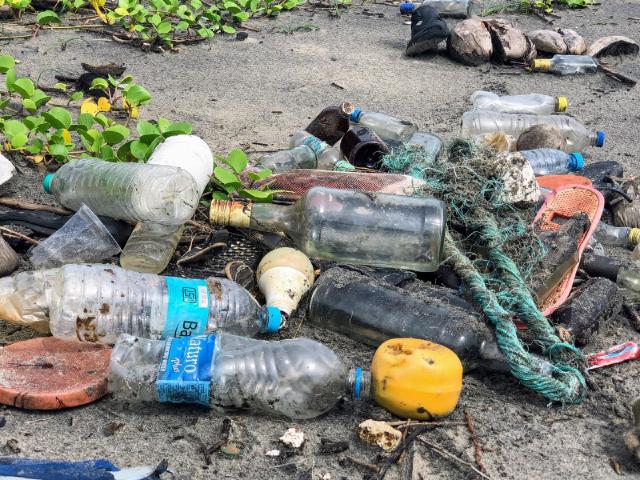
It’s interesting to watch the ways in which the current crusade against plastics manifests itself. The basic message – plastic is poison – gets through to everyone, but the reactions sometimes resemble a Chinese smithy melting down his tools to increase steel quotas during the Great Leap Awkward.

After a number of do-gooders complained, our company canteen recently replaced its plastic containers with cardboard packaging, for all those people too busy to sit down with a knife and fork. The move was celebrated as a great boon for the planet, maybe a potential way to minimise that already minuscule proportion of plastic waste that leaks out of European rivers.

One minute to read
German Melancholy

German Melancholy

Watching Stefan Raab punch the air with a full-blown Yank whoop and vainglorious ‘Yes!’, it’s easy to forget for a second that this is RTL. At least until he loses the subsequent round, punctuated with a fat Teutonic ‘NEIN!’

German is a sad language. To express moments of joy, Germans prefer to fall back on English. People stand around singing ‘Häppi Bersday’, send one another cards congratulating them when ‘It’s a boy!’, drive off from the church to the clatter of cans and a creamy white ‘Just married’ in the rear windscreen. But only the native language is good enough for the morose. Surveying the greetings cards, there are no English options for sharing your Beileid or showing your Anteilnahme.

One minute to read
Making the World a More Meaningless Place

Making the World a More Meaningless Place

Watering Can
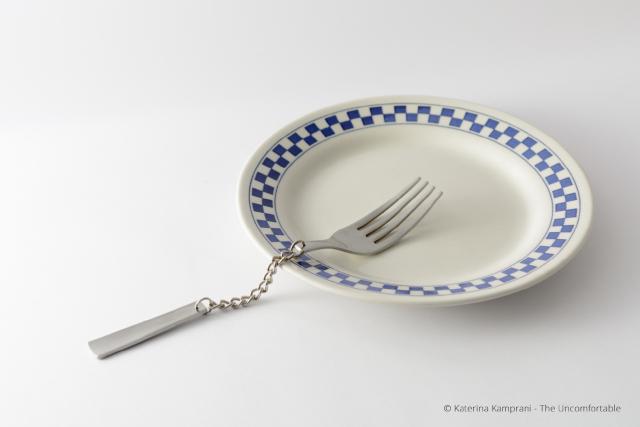
Back during my school years, one popular run of jokes revolved around the failed inventions that Ireland had attempted to contribute to modern society, things like concrete dinghies, chocolate teapots, fluorescent black paint. Architect Katerina Kamprani has produced a wonderful selection of objects reminding me of those old jokes, the kind of objects which immediately invoke the kind of frustration experienced by anyone trying to use a wrong-handed tin opener. Listed together in a collection which she calls The Uncomf ortable,  I can definitely see there being a market for these as a kind of novelty gift.
One minute to read

Freedom of Speech for Dickheads

An interesting segment in Private Eye recently about a Tory councillor whose list of apparent ‘gaffes’ included a remark favourable of Hitler. Heaven forbid! We’re all for freedom of speech, but be sure to stay away from espousing any opinions on the blacklist. I can’t help imagining he’d have any easier run of things as a devil worshipper, than as someone who once had the gall to cast a positive light on anything of the Führer’s beyond his death.
One minute to read

Lazarus on Firefox

Lazarus may be risen from the dead, but it looks like he’s now been lain to rest again once and for all. This handy plug-in for Firefox , which stores what you write in input fields and staves off the frustrations of having your work lost should your browser crash, seems to have been abandoned by its author and hasn’t been updated for some time. Each progressive new version of Firefox leaves it a little more broken, to the point where I’ve sadly been left with a button that does nothing more than say ‘Loading…’ in the latest version.
One minute to read

Learning a Second Foreign

When learning foreign in earnest for the first time, I noticed that whilst making progress in the language itself, my brain also found ways of hemming in my thoughts. It was as if my mind’s vocabulary was labelled and categorised, such that I often instinctively knew before opening my mouth whether I knew how to say what I wanted to ‘in foreign’. Knowing the word for tree bark was as important as knowing that I know the word for tree bark. Interestingly, this made trying to use languages from school more difficult: when travelling in France, a language I’ve barely used in the past decade or so, I often found myself trying to say things my mind believed me capable of saying. It would have me starting sentences, confident in the knowledge that I knew the word or phrase ‘in foreign’, only which foreign wasn’t mentioned. It seems actually knowing what to say plays second fiddle to knowing what one is able to say.
2 minutes to read